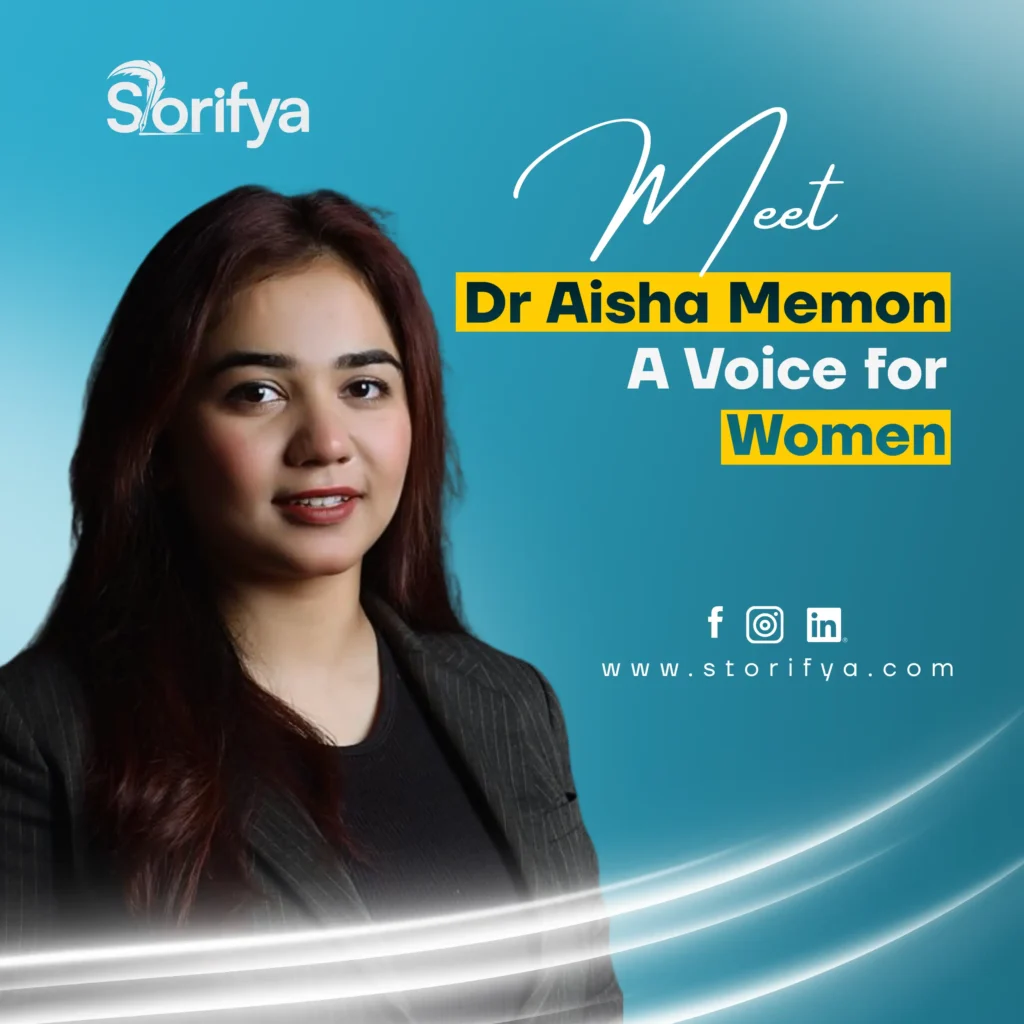
Dr Aisha Memon’s journey into activism did not begin in a classroom, a conference, or behind a podium. It began in 2022, during one of the darkest chapters in Sindh’s recent history, when devastating floods swept through villages and cities, washing away homes, livelihoods, and the sense of safety for millions of people. Roads disappeared under water. Crops were destroyed. Families were displaced overnight. But amid all this visible destruction, there was another crisis unfolding quietly, almost invisibly.
It was the suffering of women.
In flood-hit camps and remote villages across Sindh, Aisha encountered something that shook her deeply. Women who were bleeding in silence. Women enduring infections, unwanted pregnancies, and physical pain they had been taught to accept as normal. Their reproductive health was forgotten by the system, ignored by society, and over time, even dismissed by the women themselves. In the chaos of survival, their bodies became an afterthought.
That realization broke her.
She saw women managing menstruation without basic hygiene. She met mothers who had no access to family planning, no medical advice, and no space to talk about their health. Many were ashamed to speak. Others did not even know that the pain they were living with was not normal. In camps filled with aid distributions, food lines, and shelter tents, conversations about women’s bodies simply did not exist.
Aisha remembers feeling helpless and angry at the same time. She wanted to scream that their health mattered, that their lives mattered just as much as food and shelter. But she also understood why they stayed silent. For generations, these women had been taught that menstruation is shameful, that family planning is sinful, and that talking about their bodies is something to be hidden behind closed doors. In a humanitarian crisis, when survival itself felt uncertain, asking them to prioritize reproductive health felt almost impossible.
Yet, she knew that this was exactly when it mattered the most.
The biggest struggle Aisha faced was breaking this silence. Starting conversations around menstrual hygiene and family planning in deeply conservative and crisis-stricken communities required more than information. It required trust. It required patience. It required courage. Many people resisted. Some dismissed the topic. Others saw it as unnecessary or inappropriate. There were moments when the resistance felt heavier than the floods themselves.
Progress was slow. Emotionally exhausting. There were days when she questioned whether her efforts were making any difference at all. But every small step mattered. Every woman who listened quietly. Every girl who asked her first question. Every moment of understanding that replaced shame with awareness.
This struggle changed Aisha completely.
It stripped away her fear and reshaped her purpose. Activism was no longer about projects, reports, or campaigns. It became personal. Deeply personal. She realized that real activism is not comfortable. It does not always receive applause. Often, it is misunderstood. But it is necessary.
During this time, her brother stood beside her like a pillar of strength. When her voice felt small and her heart felt heavy, he reminded her why she started. Her family’s belief in her gave her the courage to step outside social expectations and continue this work, even when it invited criticism or discomfort. Their support became her anchor.
Through this journey, Aisha learned that activism cannot be momentary. It cannot appear only during crises and disappear afterward. It must be rooted in the community and sustained with compassion. Feminist leadership, she realized, is not about slogans or social media posts. It is about stepping out of the home, into the streets, into spaces where conversations are considered too taboo, and staying there until change begins.
There were moments when she wanted to give up. The stigma was overwhelming. Resources were limited. The emotional toll was heavy. But quitting was never an option. Every woman who finally spoke. Every girl who learned that her body was not something to be ashamed of. Every small shift in mindset reminded Aisha why she could not stop.
Looking back today, she would tell her younger self, “Your pain will become your purpose. Your voice will grow stronger, and one day, it will help others find theirs.”
Pakistan continues to face alarming reproductive health challenges. Maternal mortality remains high. Stigma around menstruation and family planning is deeply entrenched. Silence continues to cost women their health and sometimes their lives. Aisha believes that the only way forward is unity. Sensitising communities. Normalising conversations. Breaking taboos. Pushing boundaries together.
Her story is not just her own. It is a call to action.
Because if we, as a society and as a nation, do not stand up for women’s health and rights, then who will?